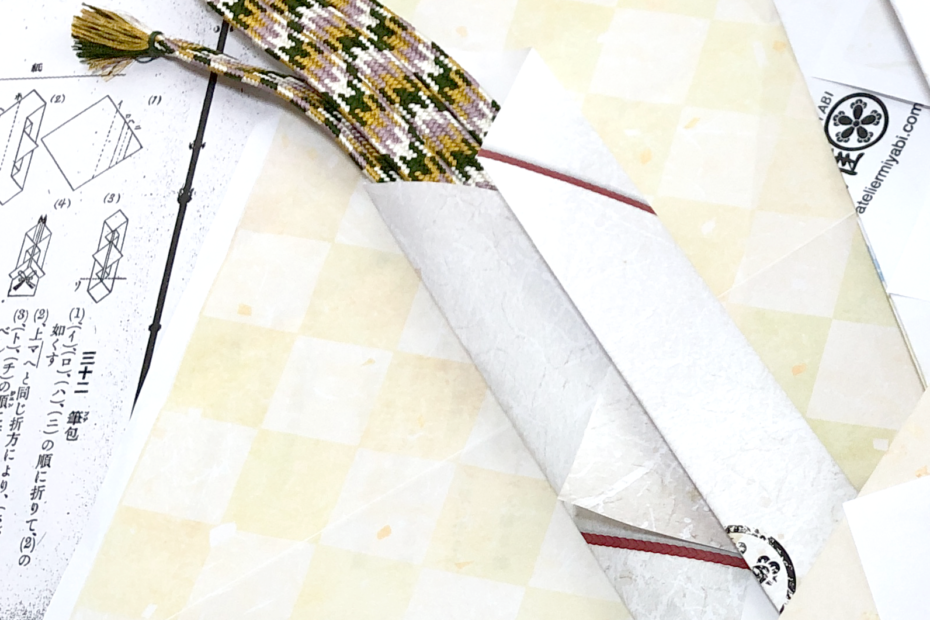
What Is Origata Wrapping?
The Meaning, History, and How to Use Traditional Japanese Gift Wrapping Today
Origata is a traditional Japanese method of wrapping using folded paper.
Unlike modern gift wrapping, it is not decorative by design. Instead, it expresses respect, intention, and consideration through structure, balance, and form.
In recent years, searches for “origata wrapping” have been increasing, especially among people interested in Japanese culture, sustainable gifting, and handmade items.
This renewed interest reflects a shift away from excessive decoration toward meaning-driven presentation.
This article explains what origata wrapping is, how it differs from modern gift wrapping, and how its principles are being adapted for contemporary use.
What Is Origata Wrapping?
Origata refers to a formal Japanese wrapping tradition in which paper is folded according to established rules, depending on the occasion and the item being wrapped.
It developed within samurai culture as part of礼法 (reihō), the etiquette governing gifts and formal exchanges.
In origata, wrapping is not meant to conceal the gift.
Instead, the folds, overlaps, and direction of the paper communicate intention and respect. Every detail has meaning.
This is why origata is considered a form of cultural expression rather than a simple packaging technique.
Origata Wrapping vs Modern Gift Wrapping
Modern gift wrapping typically focuses on visual impact: ribbons, colourful paper, symmetry, and personal style.
Origata wrapping takes a very different approach.
Key differences include:
- Asymmetry is intentional and meaningful
- White space is valued rather than filled
- Structure matters more than decoration
Although origata may appear simple at first glance, it is not informal or careless.
Its restraint is what conveys sincerity and respect.
Why Is Origata Wrapping Gaining Attention Today?
There are several reasons why origata wrapping is being rediscovered.
First, minimalism and sustainability have become important values.
Origata uses fewer materials and avoids unnecessary embellishment, making it well suited to modern sensibilities.
Second, the growth of handmade and small-batch gifting has increased interest in presentation that feels intentional rather than mass-produced.
Origata aligns naturally with this mindset.
Finally, in an international context, origata is increasingly recognised as a uniquely Japanese form of gift wrapping.
It is often introduced overseas as part of Japanese cultural aesthetics, alongside concepts such as wabi-sabi and mindful craftsmanship.
When Can Origata Wrapping Be Used?
Although origata originated in formal settings, its principles are now applied more broadly.
Common modern uses include:
- Wrapping cash or gift vouchers
- Packaging jewellery or small handcrafted items
- Thank-you gifts and understated celebrations
- Gifts intended to convey Japanese cultural values
Even when simplified, origata-inspired wrapping adds a sense of thoughtfulness that standard gift wrap often lacks.
Things to Keep in Mind When Using Origata Wrapping
Traditional origata follows strict rules depending on the occasion.
However, for everyday gifting, it is not necessary to follow these rules perfectly.
What matters most is:
- Avoiding inappropriate colours or forms
- Keeping folds neat and deliberate
- Choosing materials with a calm, neutral tone
An imperfect but carefully folded wrap is far more respectful than a hurried, decorative one.
The spirit of origata lies in intention, not perfection.
Materials That Work Well with Origata Wrapping
Paper choice is central to origata wrapping.
Washi is traditionally used, but any thin, foldable paper with minimal patterning can work.
In contemporary adaptations, uncoated paper, recycled paper, or plain Western paper is often used to focus attention on the fold itself.
When ties or cords are used, they are not decorative accents.
Their role is to support and stabilise the wrapping without drawing attention away from the paper.
This understated approach reflects the core philosophy of origata.
Conclusion: Origata Wrapping as a Thoughtful Way to Give
Origata wrapping is not about visual impact.
It is about preparing a gift with care and presenting it in a way that reflects respect for the recipient.
In a world of increasingly disposable packaging, origata offers a quieter, more intentional alternative.
By incorporating even a small part of its philosophy, the act of giving can become more meaningful.
Frequently Asked Questions (FAQ)
Is origata wrapping considered rude if the traditional rules are not followed?
No. For everyday gifts and informal occasions, it is not necessary to follow all traditional rules strictly.
As long as the wrapping is clean, thoughtful, and appropriate to the situation, the intention will be understood and appreciated.
What is the difference between origata wrapping and mizuhiki wrapping?
Origata wrapping expresses meaning through the folding structure of the paper itself.
Mizuhiki wrapping, on the other hand, uses decorative cords to symbolise celebration or formality.
They serve different roles, although they may be combined in certain contexts.
The BOOK
Recommended products
-
Japanese tenugui towel fabric Japanese traditional pattern “Same komon” /Cotton 100% / Made in Japan
¥1,400Approximate price≈ US$9 · €8 · £7Charged in JPY -
Tenugui towel Japanese traditional pattern “sayagata” blue /Cotton 100% / Made in Japan
Price range: ¥1,400 through ¥9,000Approximate price≈ US$9 · €8 · £7Charged in JPY -
Tenugui set of 5 Japanese printed tenugui towel small traditional pattern blue set J /Cotton 100% / Made in Japan/13inch x 35.5inch
¥6,600Approximate price≈ US$42 · €36 · £31Charged in JPY -
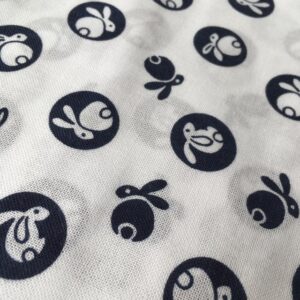
Japanese tenugui towel fabric Japanese traditional pattern “moon rabbit” /Cotton 100% / Made in Japan
Price range: ¥1,400 through ¥5,600Approximate price≈ US$9 · €8 · £7Charged in JPY -
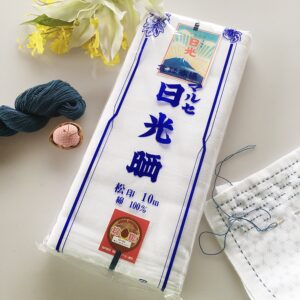
Tenugui towel white solid UNCUT sarashi 10m/20yarn count”BUN”/Japanese Cotton 100% /Good for sashiko /Made in Japan
¥4,800Approximate price≈ US$30 · €26 · £23Charged in JPY -
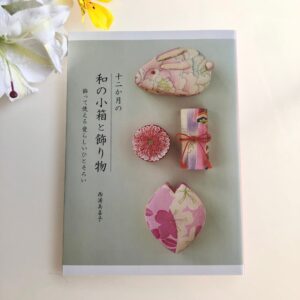
Japanese small boxes and ornaments of the twelve months, a lovely assortment that can be displayed and used/ Japanese needle work Book
¥3,800Approximate price≈ US$24 · €21 · £18Charged in JPY -
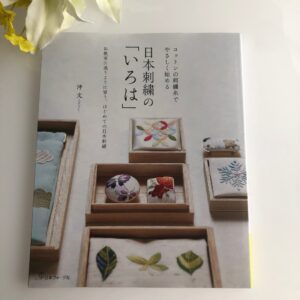
ABC of Japanese embroidery. Easy to start with cotton embroidery thread. /Japanese needle work Book
¥2,300Approximate price≈ US$15 · €13 · £11Charged in JPY -
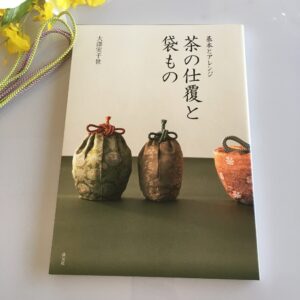
Basics and Arrangements Tea Covers shifuku and Bags , How to make,Japan craft book Japanease bag
¥4,800Approximate price≈ US$30 · €26 · £23Charged in JPY -
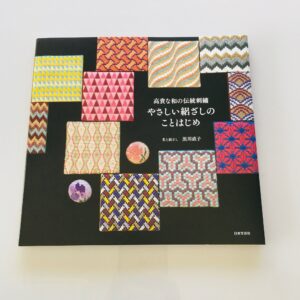
Gentle Ro-Zashi Embroidery – An Introduction to Elegant Traditional Japanese Stitching
¥3,500Approximate price≈ US$22 · €19 · £16Charged in JPY