Understanding the Difference Between Japan’s Traditional Ceremonial Cords
In Japanese culture, cords are more than decorative materials.
They carry meaning.
Two of the most well-known traditional cords used in ceremonial contexts are mizuhiki and kumihimo. While they may appear similar at first glance, they differ significantly in material, construction, historical origin, and symbolic meaning.
Understanding these differences reveals something deeper about Japanese culture — the philosophy of musubu (結ぶ), the act of tying and connecting.
What Is Mizuhiki?
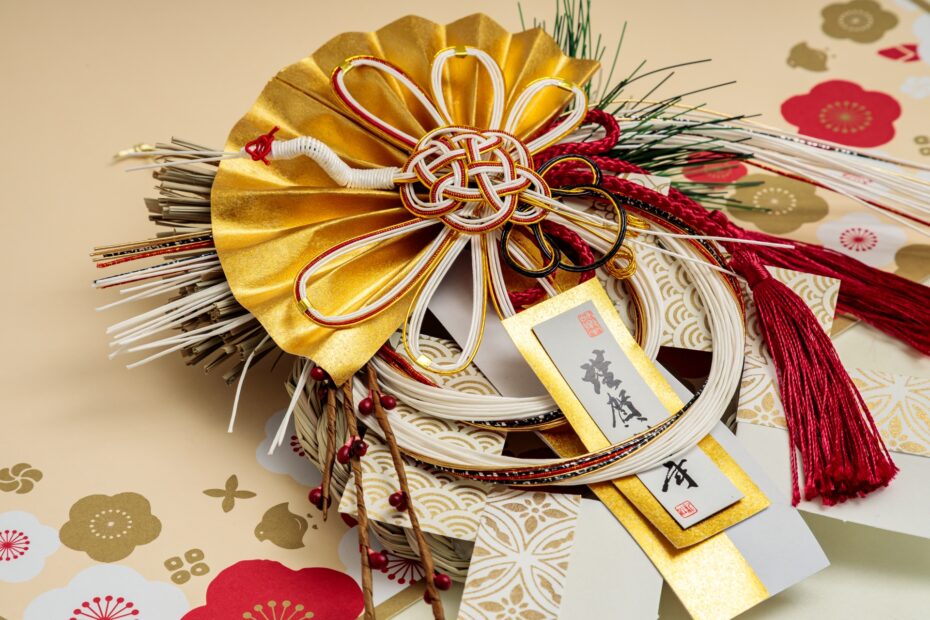
Mizuhiki is a decorative cord made from tightly twisted paper that has been stiffened and coated.
It is primarily used for ceremonial presentation:
• Gift wrapping for weddings and celebrations
• Decorative envelopes (noshi-bukuro)
• Formal packaging for life events
Mizuhiki is not a functional cord meant to be untied and reused.
It belongs to the realm of etiquette and ornamentation.
The knot is created to complete the presentation — to give visible form to the occasion. Once tied, it serves as a symbolic finish rather than a cord intended for repeated handling.
Its meaning lies in ceremonial display, not in utility.
A Brief History of Origata (折形)
To understand mizuhiki more deeply, it helps to look at the tradition of origata.
Origata refers to the formal art of folding and wrapping gifts using paper. The practice developed within samurai etiquette during the Muromachi period (14th–16th century), when strict rules governed the presentation of offerings to superiors and deities.
In origata, each fold carries intention. The direction and layering communicate respect, hierarchy, and sincerity.
As gift presentation customs evolved, decorative cords were added to secure folded paper envelopes and ceremonial offerings. Mizuhiki grew from this culture of formalized presentation.
In this context, mizuhiki represents:
• Respect
• Formal acknowledgment
• Celebration
• Social recognition
It belongs to the world of ritual etiquette.
What Is Kumihimo?
Kumihimo literally means “gathered threads.”
Unlike mizuhiki, kumihimo is a braided cord traditionally made from silk. The technique dates back centuries and has been used for armor lacing, sword fittings, and kimono accessories.
Kumihimo is textile-based, flexible, and structurally integrated. It is created by interlacing multiple strands into a unified form.
Where mizuhiki emphasizes knot shape, kumihimo emphasizes braided structure.
Historical and Material Differences
Mizuhiki
• Made from paper
• Stiff texture
• Primarily ceremonial
• Meaning expressed through knot form
Kumihimo
• Traditionally made from silk
• Soft and flexible
• Historically functional and structural
• Meaning expressed through interwoven strands
These material differences shape their symbolic roles.
Symbolic Differences
Mizuhiki symbolism lies in the knot itself. The act of tying formalizes an occasion.
Kumihimo symbolism lies in integration. Multiple threads remain visible, yet gain strength through interdependence.
One expresses connection through ceremony.
The other expresses connection through structure.
Both reflect binding — but in different ways.
Which Is More Suitable for Wedding Rituals?
Both materials can carry wedding symbolism.
Mizuhiki is widely recognized in Japan as a celebratory material and is strongly associated with formal wedding etiquette.
Kumihimo, especially when made from silk, offers a metaphor of integration — two lives woven into one structure.
The choice depends on intention:
• Decorative celebration and public acknowledgment → Mizuhiki
• Structural unity and interwoven partnership → Kumihimo
To see how red cords inspired by legend are incorporated into certain shrine ceremonies, read:
👉 The Red Thread Wedding Ritual in Japan
To understand the broader structure of shrine weddings, see:
👉 How a Traditional Shinto Wedding Ceremony Works
For the cultural background of destiny symbolism, explore:
👉 The Red Thread of Fate in Japanese Culture
The Core Idea: Musubu (結ぶ)
Whether through mizuhiki, origata, or kumihimo, one idea runs consistently through Japanese ceremonial culture: musubu — to tie, to bind, to connect.
In origata, paper is folded and secured with intention.
In mizuhiki, cords are knotted to formalize a celebration.
In kumihimo, threads are braided into structural unity.
The act itself carries meaning.
To tie is not merely to fasten.
It is to acknowledge the connection.
It is to give form to intention.
It is to make the relationship visible.
At the heart of Japanese ceremonial binding lies a simple yet profound act:
To connect.
To integrate.
To form something enduring together.
Frequently Asked Questions
What is the main difference between mizuhiki and kumihimo?
Mizuhiki is a decorative paper cord associated with formal presentation and ceremonial etiquette. Kumihimo is a braided textile cord traditionally made from silk and associated with structural integration.
Is mizuhiki only used for weddings?
No. Mizuhiki is used for many life events in Japan, including births, graduations, and funerals. Different knots and colors carry different meanings.
Is kumihimo traditionally used in weddings?
Historically, kumihimo was used in armor, swords, and kimono accessories rather than weddings. However, its symbolism of interwoven structure makes it meaningful in modern ceremonial interpretations.
What does “musubu” mean in Japanese culture?
“Musubu” (結ぶ) means to tie, bind, or connect. In Japanese culture, tying carries symbolic meaning related to relationships and continuity.
Which material is more suitable for a symbolic wedding ritual?
It depends on the philosophy behind the ritual. Mizuhiki emphasizes formal celebration and etiquette, while kumihimo emphasizes integration and structural unity.