Meaning, Origins, and Its Influence on Weddings
The “Red Thread of Fate” is a legend shared across East Asia that has become deeply embedded in Japanese culture.
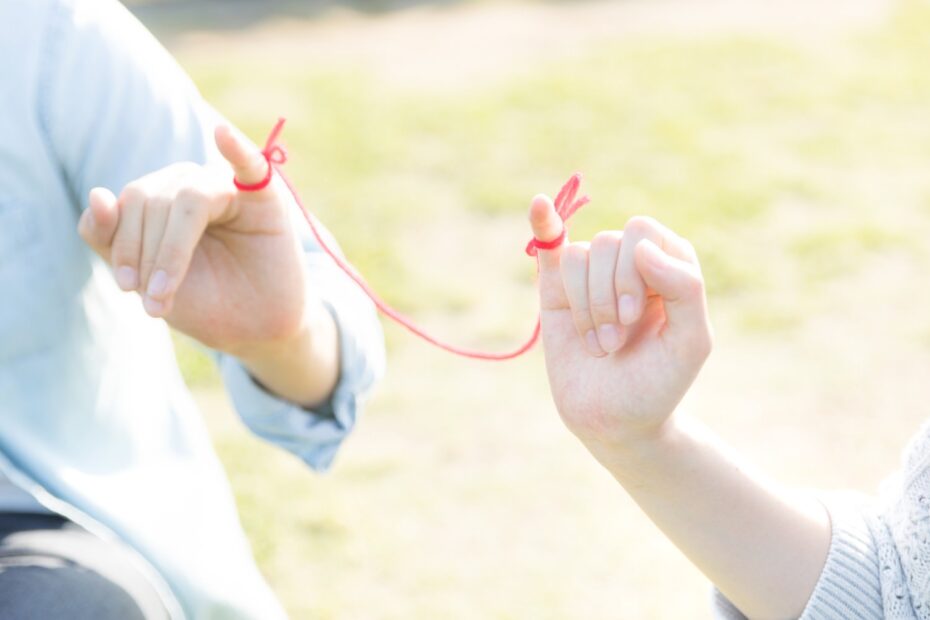
According to the story, two people who are destined to meet are invisibly connected by a red thread tied to their little fingers. No matter how far apart they are, the thread may stretch or tangle—but it will never break.
In Japan, this legend is often associated with romantic destiny and lifelong connection.
Origins of the Red Thread Legend
The legend is believed to have originated in ancient Chinese folklore, then spread to Japan and other parts of East Asia.
In early versions of the story, a celestial matchmaker ties an invisible red thread between two future partners. Even if the individuals are unaware of each other, fate will eventually bring them together.
Over time, the legend became widely associated with love and marriage.
Why the Little Finger?

In Japanese culture, the little finger carries symbolic meaning related to promises and romantic bonds.
The expression “yubikiri” (pinky promise) reflects this idea. The red thread tied to the little finger represents a vow that cannot easily be broken.
This symbolism later influenced wedding-related rituals involving red cords.
The Red Thread in Modern Japanese Culture
The red thread motif appears frequently in modern Japanese culture, reinforcing its association with destiny and romantic connection.
Literature
The legend has been referenced in modern novels and retellings of East Asian folklore. Academic discussions of the Red Thread of Fate often trace its origins to Chinese folklore before examining its adaptation in Japan.
(See: https://en.wikipedia.org/wiki/Red_thread_of_fate)
Film and Animation
The red thread concept is widely recognized through Japanese animation and film. One internationally known example is Your Name (2016), directed by Makoto Shinkai, where braided cords symbolize fate and connection between two people separated by time and space.
(Official film page: https://kiminona.com/)
While the film does not literally depict a red thread tied to fingers, the braided cord serves as a visual metaphor for destiny.
Wedding Imagery
While often romanticized, the core message remains the same: connection transcends time and distance.
One well-known example of a red cord wedding ritual is practiced at Kawagoe Hikawa Shrine in Saitama Prefecture.
Kawagoe Hikawa Shrine is widely recognized in Japan as a shrine dedicated to matchmaking and harmonious relationships. Its official website provides information about the shrine’s history and wedding ceremonies:
https://www.kawagoehikawa.jp/
While ceremony details may vary over time, the shrine is often cited in discussions of red thread-inspired wedding symbolism in Japan.
In contemporary Japanese weddings, the red thread motif sometimes appears in ceremonial acts where couples tie red cords around their little fingers. This is inspired by the legend and incorporated into certain shrine ceremonies.
(Example of wedding coverage: https://wedding.mynavi.jp/contents/press/detail/post-122/)
Popular Culture
The red thread imagery also appears in manga, television dramas, and romantic storytelling across Japan. It often represents an invisible but inevitable connection between two people destined to meet.
Across media, the core idea remains consistent: connection transcends distance and circumstance.
Although interpretations vary, the red thread continues to function as a powerful cultural metaphor for destiny, especially in romantic contexts.
How the Legend Influenced Wedding Rituals
In some Japanese wedding ceremonies, couples tie red cords around each other’s little fingers to symbolize the Red Thread of Fate.
This act makes an invisible destiny visible.
One well-known example is a red cord ritual practiced at Kawagoe Hikawa Shrine during Shinto weddings.
(For a detailed explanation, see:👉 The Red Thread Wedding Ritual in Japan.)
While the red cord ritual is inspired by legend, it is often incorporated into a broader Shinto wedding structure.
To better understand how this symbolic act fits within traditional shrine ceremonies, read our guide:
👉 How a Traditional Shinto Wedding Ceremony Works
Understanding the full ceremony provides deeper context for how red thread symbolism is expressed in practice.
Cultural Meaning Beyond Romance
The Red Thread of Fate is not only about romance. It also reflects a broader Japanese concept of “en” — connection or karmic relationship.
In this view, relationships are not random. They are meaningful intersections in life.
This philosophy is reflected in traditional wedding rituals that emphasize binding, tying, and symbolic unity.
Final Thoughts
The Red Thread of Fate is a powerful legend that continues to influence Japanese wedding symbolism today.
Whether expressed through story, imagery, or ritual, the idea of an invisible bond connecting two people remains deeply meaningful.
Understanding this legend provides important context for modern Japanese wedding traditions that incorporate red cords or symbolic tying.