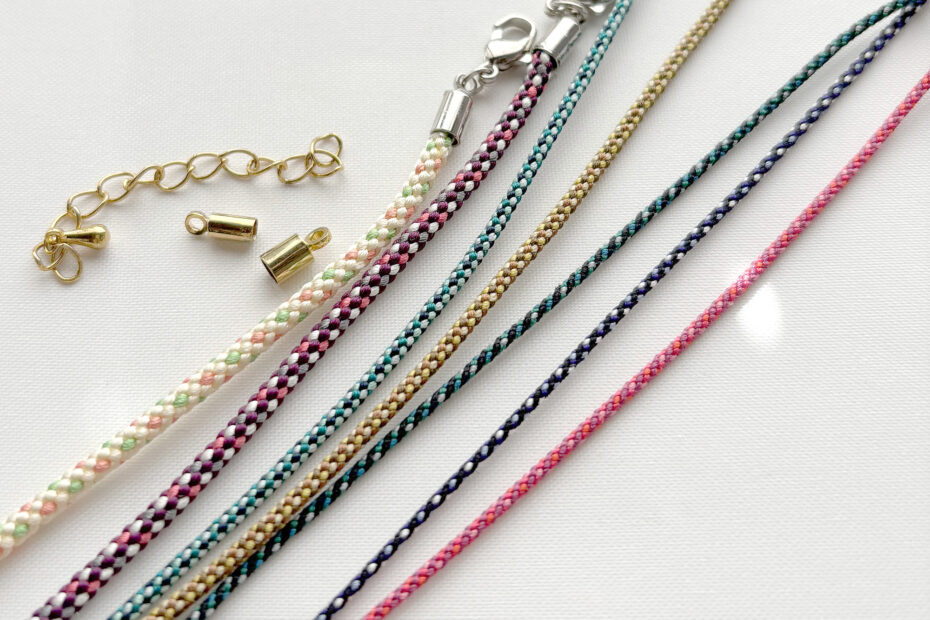
Kumihimo is a braided textile with a unique character, texture, and structure. Its flexibility and refined appearance make it an appealing material for many kinds of products.
At the same time, kumihimo has its own natural characteristics as a braided textile. When considering it for product use, it is helpful to understand these characteristics in advance so that the material can be used in a way that suits both the design and the production process.
Kumihimo Is a Flexible Braided Textile
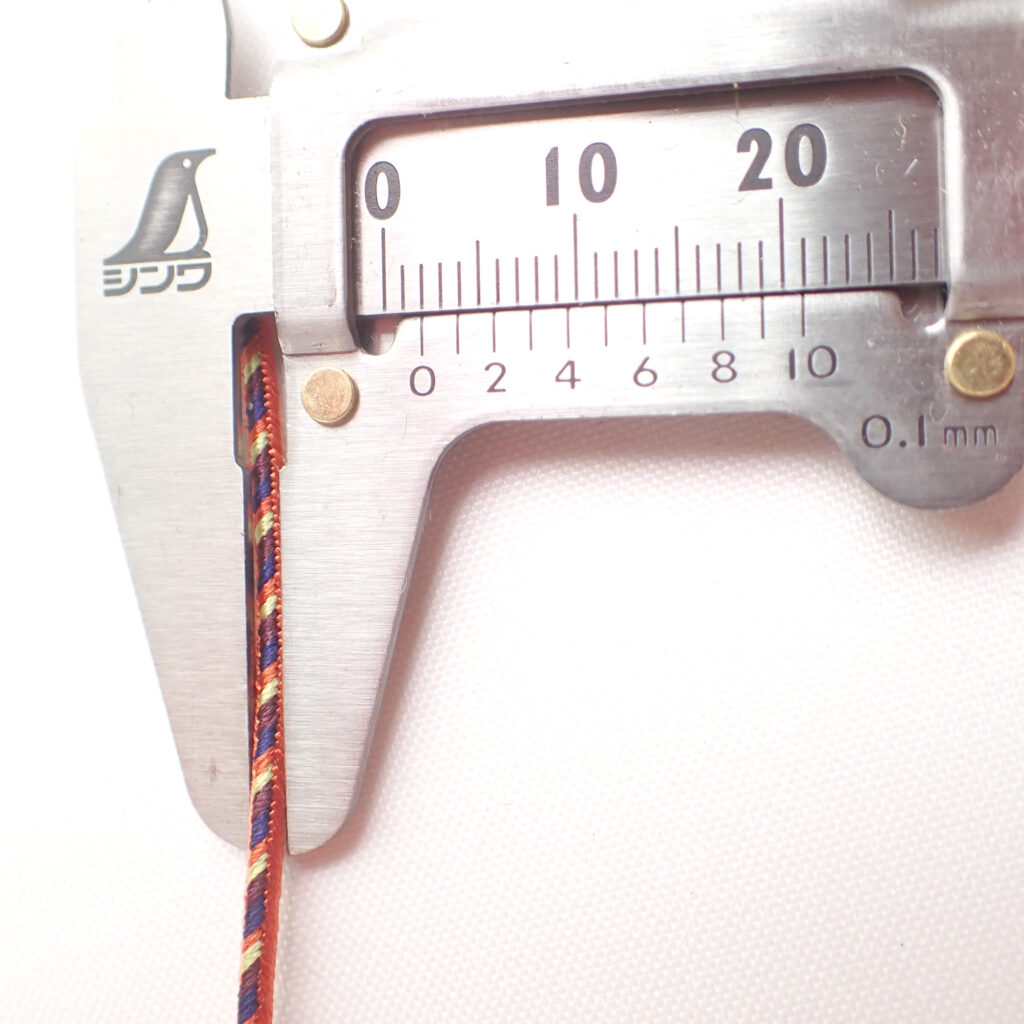
Unlike rigid industrial materials, kumihimo is made by braiding threads into a structured but flexible form. Because it is textile-based, its shape and dimensions are influenced by the material itself, the braid structure, the tension, and the finishing condition.
This flexibility is part of what gives kumihimo its appeal. It also means that it behaves differently from molded, cut, or machined parts.
Slight Size Variation Is a Natural Characteristic
When kumihimo is used in a product, one important point to keep in mind is that slight variation in width, thickness, and length can occur naturally.
This is not unusual, and it should not be understood as a defect. Rather, it is one of the natural characteristics of a braided textile structure.
Even when the same design is produced carefully and consistently, dimensions may still vary slightly depending on the material and construction.
Width, Thickness, and Length Can Be Affected
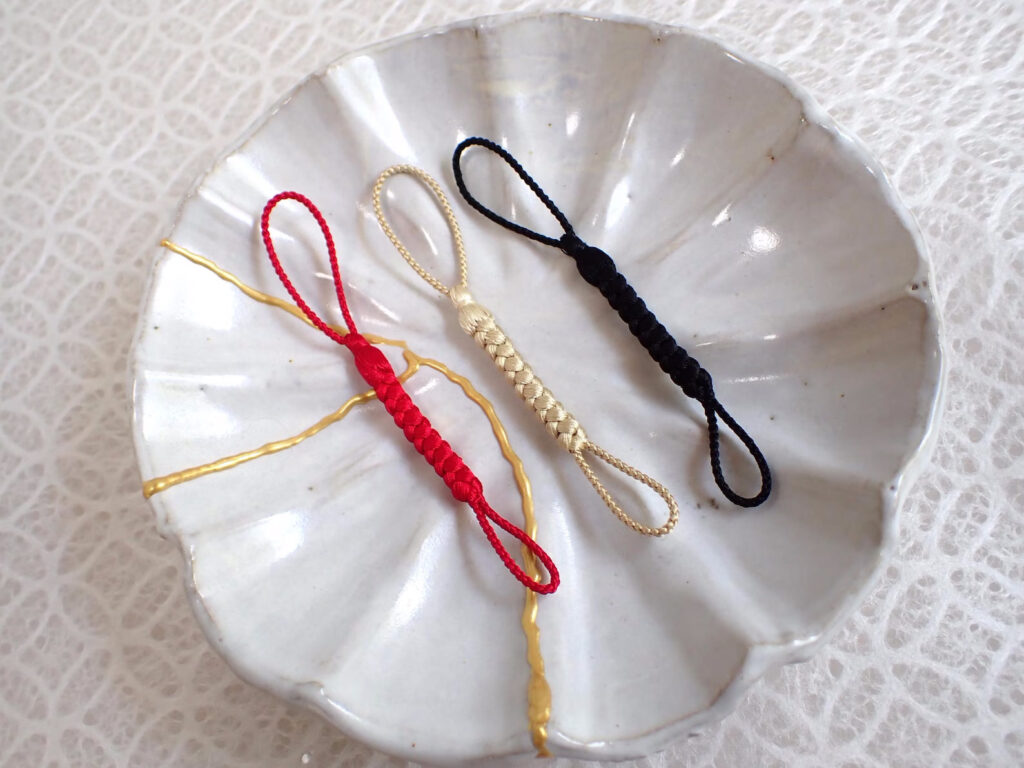
The dimensions of kumihimo can be influenced by several factors, including:
- the material of the threads
- the braid structure
- the tension during production
- the finishing method
- the way the braid is measured
- the end construction, including loops or folded sections
Because kumihimo is soft and flexible, very narrow tolerances may not always be realistic in the same way they would be for rigid industrial components.
Why This Matters in Product Design
When incorporating kumihimo into a product, it is best to consider its characteristics from the design stage.
A product design that allows for the natural flexibility and slight dimensional variation of kumihimo will generally lead to smoother development and more stable production. In contrast, designs that require extremely strict dimensional precision may need further review to determine whether kumihimo is the right material choice.
This does not reduce the value of kumihimo as a material. Rather, it highlights the importance of using it with a good understanding of what makes it unique.
Kumihimo Works Best When Its Nature Is Respected
Kumihimo is valued not only for its appearance, but also for its texture, movement, and crafted structure. These qualities are closely connected to the same characteristics that can cause slight dimensional variation.
By understanding kumihimo as a braided textile, it becomes easier to make appropriate design decisions and to use the material in a way that brings out its strengths.
A Few Common Questions
Is slight size variation considered a defect?
No. Slight variation in width, thickness, and length is a natural characteristic of kumihimo as a braided textile. It should not be understood as a defect when it falls within a reasonable range for the material and structure.
Can kumihimo be made to exact dimensions?
Kumihimo can be produced with care and consistency, but exact dimensional control at the same level as rigid industrial parts may not always be suitable. Its flexible textile structure naturally allows for slight variation.
Why can size vary even when the same design is used?
The final dimensions of kumihimo can be influenced by thread material, braid structure, production tension, finishing, and measurement method. Because it is a braided textile, small differences can occur naturally even within the same design.
Does this affect product quality?
Not necessarily. Slight dimensional variation does not mean that the quality is unstable. In kumihimo, quality is better understood in terms of overall balance, structure, appearance, and suitability for use.
What should be considered when using kumihimo in a product?
It is helpful to consider kumihimo as a flexible braided textile from the beginning of the design process. Products that allow for its natural characteristics tend to achieve smoother development and more stable results.
Is kumihimo suitable for designs that require very strict tolerances?
This depends on the required level of precision. If a product depends on extremely narrow tolerances, the suitability of kumihimo should be reviewed carefully at the design stage.
Final Note
Kumihimo offers a distinctive beauty and presence that few other materials can provide. To use it successfully in a product, it is important to understand its natural characteristics in advance, especially in relation to flexibility, structure, and slight size variation.
With this understanding, kumihimo can be incorporated more smoothly and more appropriately into product design.