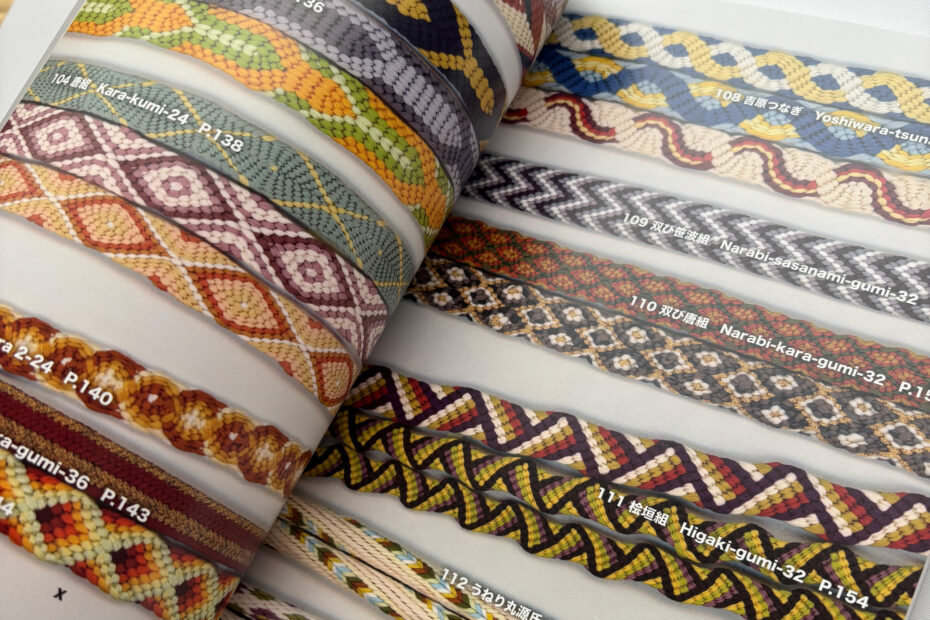
“Kumihimo on the Marudai” is a Japanese–English bilingual kumihimo reference book designed for self-study.
It explains 120 traditional marudai braiding techniques with clear diagrams, making it suitable for learners without access to formal kumihimo classes.
Kumihimo is often seen as a craft that must be learned in a traditional classroom.
For many people outside Japan, that assumption alone can feel like a barrier.
This book offers a different approach.
────────────────
Learning Kumihimo as a Traditional Japanese Craft
“Kumihimo on the Marudai” is intended for those who wish to study kumihimo as a traditional Japanese craft, rather than as a quick jewellery-making technique.
It is especially suited to independent learners who want to understand tools, structure, and process.
Instead of focusing on fast results or trends, the book emphasizes how braids are formed, how they behave, and why each structure exists.
This approach reflects how kumihimo has historically been learned and practiced in Japan.
────────────────
Clear Diagrams for Marudai Kumihimo Self-Study
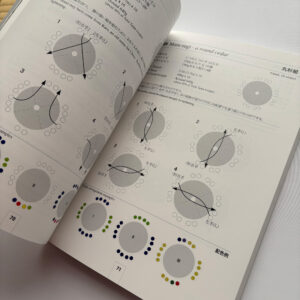
The book introduces 120 traditional marudai kumihimo techniques, progressing from basic structures to more advanced forms.
Each technique is explained primarily through diagrams, allowing readers to understand braid construction visually rather than relying solely on text. Japanese terminology is accompanied by English explanations, making the content accessible while remaining faithful to traditional practice.
For learners studying on their own, this diagram-based method is especially effective.
────────────────
Techniques Included in This Kumihimo Reference Book
This revised edition combines and updates two previously out-of-print instructional volumes and adds 43 additional braiding methods.
The book includes:
• flat, round, and complex marudai braids
• triangular and semi-round cross-section techniques
• traditional color arrangement examples
• structural variations useful for cords and decorative braids
Many of these techniques are also applicable to kumihimo jewellery making, particularly for necklaces and braided cords, while maintaining a traditional foundation.
────────────────
Practical Details Often Overlooked in Kumihimo Guides
One of the strengths of this book is its attention to practical details that are often omitted from general how-to guides.
It includes clear explanations of:
• attaching and balancing weights on the marudai
• maintaining even tension throughout the braiding process
• traditional methods for finishing braid ends, including tassel finishing
These elements are essential for understanding kumihimo as a craft, not just for producing a finished object.
────────────────
Who This Book Is For
This book is ideal for readers who:
• want to learn kumihimo at home without attending classes
• are interested in traditional Japanese textile crafts
• prefer structured, diagram-based learning
• seek a long-term kumihimo reference rather than a one-project guide
• wish to deepen their understanding of marudai braid structure
While beginners can start with this book, it is also valued by experienced makers as a reference to return to over time.
────────────────
A Trusted Kumihimo Self-Study Reference
Highly rated by Japanese readers for its clarity and depth,
“Kumihimo on the Marudai” is often described as a book that grows with the reader.
If you have ever felt that kumihimo was out of reach because you could not attend a class, this book was made to remove that barrier and offer a clear path for independent study.
────────────────
FAQ
Q: Is this kumihimo book suitable for beginners learning at home?
A: Yes. While it is a serious reference book, the techniques progress from basic to advanced and are explained through diagrams, making it suitable for independent beginners as well as experienced learners.