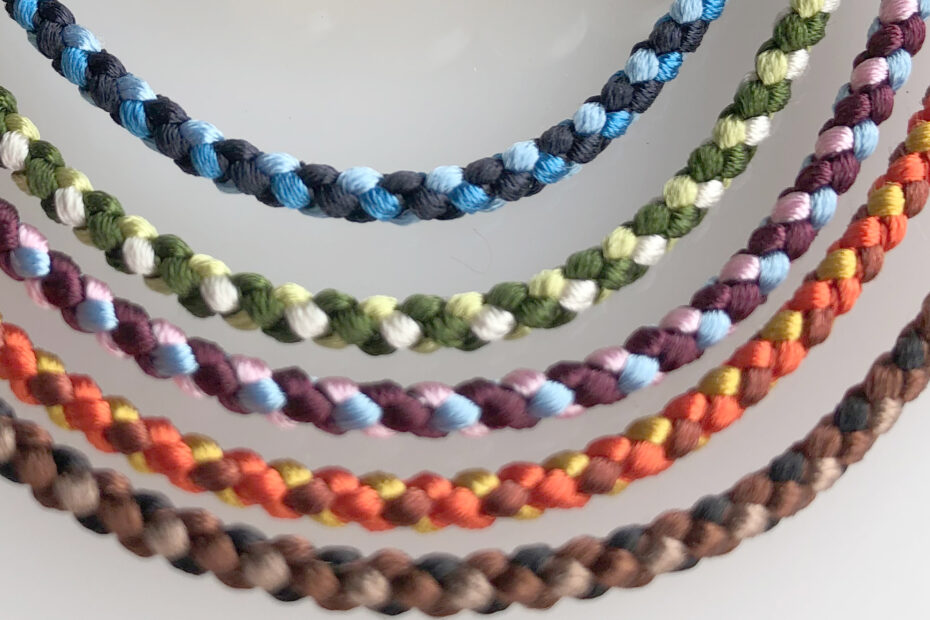
This page serves as a visual reference for understanding how color distribution affects a simple round kumihimo structure.
Maru Yotsu-gumi is a traditional 4-strand round kumihimo braid often introduced in beginner braiding classes.
This simulator allows you to visualize a fixed three-color layout for educational and design reference.
What is Maru Yotsu-gumi?
Maru Yotsu-gumi is a round 4-strand kumihimo structure created by alternating crossing movements.
Its clear structure makes it ideal for learning color balance and basic braid mechanics.
3-Color Layout Reference
This tool shows a single reference layout using three colors for clarity and ease of understanding.
Marudai Starting Position (4 Tama)
For hand-braiding reference, a simplified 4-tama marudai starting position is shown above.
Starting orientation may vary depending on teaching method.
Traditional Use of 4-Strand Kumihimo
Maru Yotsu-gumi has traditionally been used for cords attached to shifuku (protective silk pouches for tea utensils) and inro (traditional Japanese waist pouches). Its balanced, round structure provides both durability and refined simplicity, making it suitable for functional fastening in formal settings.
In the context of tea culture, a shifuku cord was not merely a practical closure. In some traditional settings, the specific tying method served as a “key” and “password,” helping ensure the contents were not tampered with. The knot structure conveyed familiarity and trust within a shared cultural practice.
Rather than serving only as decoration, the cord and its tying method embodied responsibility, discretion, and aesthetic restraint—qualities central to traditional Japanese craft.
The cultural context of Japanese ceremonial practices deepens understanding of kumihimo’s traditional significance.
For further cultural context on traditional Japanese craft and ceremonial practices related to kumihimo use, you may also find the following English-language resources helpful:
- Learn about the Way of Tea from the Urasenke official guide, an introduction to the tea ceremony and its philosophy.
- The tradition of Chanoyu as presented by Omotesenke, offering historical and cultural insight.
- Overview of the Japanese Tea Ceremony (Chanoyu) on Wikipedia, summarizing the practice and its cultural significance.
These resources provide additional background on the cultural world in which kumihimo cords like Maru Yotsu-gumi have been used.
Comparing Color Distribution in 4-Strand Kumihimo
Although the structure of Maru Yotsu-gumi remains the same, different color distributions create distinctly different visual effects.
Two-Color Layout
(2:2 Distribution)
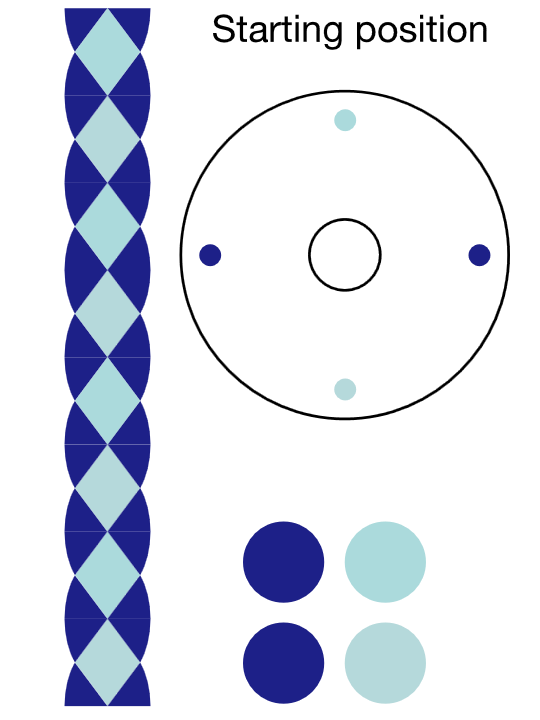
When two strands use one color and the other two strands use a second color, the braid forms strong vertical stripes.
The structure appears clear, bold, and graphic.
Three-Color Layout (2:1:1 Distribution)
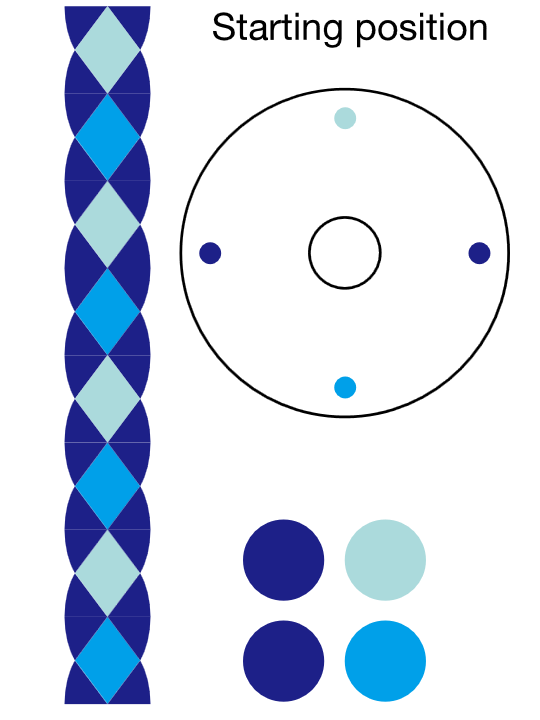
When one color is repeated and the remaining two strands each carry different colors, the braid develops a balanced rhythm.
The repeated color becomes the main vertical accent, while the other two colors introduce subtle variation between the stripes.
Main-Dominant Layout (3:1 Distribution)
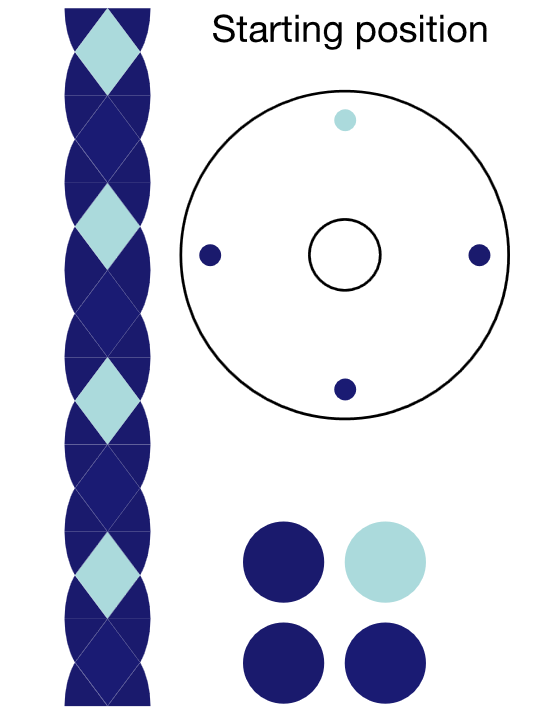
When three strands share the same main color and one strand introduces contrast, the braid produces a dotted or rhythmic accent rather than continuous stripes.
The single contrasting strand appears at regular intervals, creating a refined and controlled visual emphasis.
These examples show how even a simple 4-strand structure can generate varied design expressions through color placement alone.
You may also explore our recommended self-study resources for further learning.
📖 Learning Kumihimo Without a Class-A Marudai Kumihimo Reference Book for Self-Study
This simulator may be referenced in kumihimo classes, workshops, or instructional materials with attribution.
Interested in more complex layout variations?
Once you understand how color placement affects a 4-strand structure, you can explore more complex 8-strand kumihimo layouts designed for advanced study and professional production.
→ Explore the 8-Strand Custom Kumihimo Layout Simulator
If you reference this page in educational material, we would appreciate a link back to this resource.