For many couples, exchanging rings feels expected.
For others, it feels inherited rather than chosen.
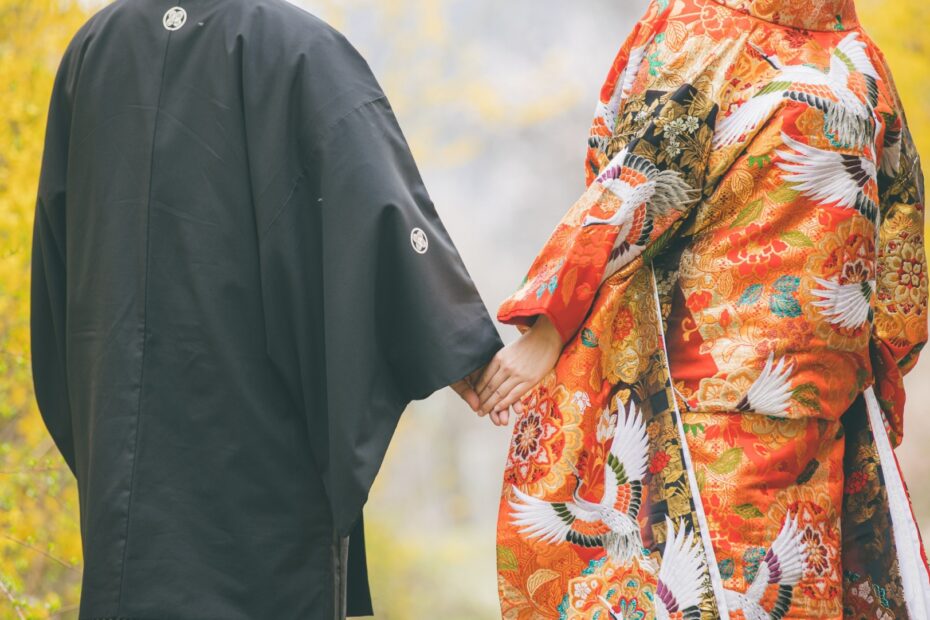
In traditional Shinto weddings, ring exchange was never the central act. The essence of ceremony lies not in metal, but in gesture — in actions that make commitment visible.
If rings are set aside, the question is not what replaces them, but what action best expresses shared intention.
This article explores alternative wedding rituals that focus on meaning over material — gestures of binding, lighting, pouring, and connecting that give form to a vow.
Why Ring Exchange Became Central
The modern ring exchange in Western ceremonies symbolizes continuity — a circular form without beginning or end. It represents permanence.
But the object is not the essence.
The essence is visible commitment.
A gesture that gives form to intention.
Across cultures, that gesture has taken many shapes.
When Couples Seek Something Else
Couples who look for alternatives often seek:
• A ritual that reflects shared values
• A gesture that involves touch or binding
• A symbol rooted in culture rather than convention
• Something meaningful rather than ornamental
The alternative is not about rejecting tradition.
It is about choosing consciously.
Symbolic Rituals of Connection
Around the world, many ceremonies embody connection without rings.
Handfasting
A ribbon or cord is tied around joined hands. The act of binding expresses unity and shared path.
Unity Candle
Two flames become one, symbolizing the merging of lives.
Sand Ceremony
Different colored sands are poured together, forming a single layered vessel that cannot be separated again.
Each of these rituals gives physical form to relationship.
But some couples seek something quieter.
A Note on Shinto Wedding Traditions
In traditional Shinto wedding ceremonies in Japan, ring exchange is not historically central to the ritual.
The core elements of the ceremony focus on spoken vows, shared sake (san-san-kudo), and formal offerings made before the kami. These acts are structured gestures performed with intention and sequence.
The emphasis lies not in exchanging an object, but in performing a visible act of commitment.
In this sense, the essence of ritual is not the material symbol itself, but the action that makes intention public and embodied.
When viewed from this perspective, a ceremony without rings is not incomplete.
It simply asks a different question:
What action best expresses your shared vow?
Japanese Perspectives on Binding
In Japanese culture, the act of tying carries its own philosophy: musubu (結ぶ).
To tie is not merely to fasten.
It is to connect, to acknowledge relationship, to give shape to intention.
Symbolic binding appears in different materials and contexts:
• Red threads inspired by legends of destiny
• Decorative mizuhiki knots marking a celebration
• Braided kumihimo cords formed through interwoven strands
These materials differ, but they share one gesture: binding.
Not as ornament, but as acknowledgment.
For readers interested in how red cords appear in shrine ceremonies, see:
The Red Thread Wedding Ritual in Japan
To understand how structure and flow shape traditional ceremonies, see:
How a Traditional Shinto Wedding Ceremony Works
Choosing a Ritual Based on Meaning
If rings are set aside, the question becomes:
What gesture best reflects your understanding of partnership?
Is it continuity?
Integration?
Shared flame?
Visible binding?
The form matters less than the intention.
Across cultures, rituals exist not to decorate commitment, but to make it visible.
Sometimes that visibility lies in metal.
Sometimes it lies in a thread.
The Core of the Ritual
Every ceremony contains an action.
A lighting.
A pouring.
A tying.
When couples search for alternatives to ring exchange, they are not searching for novelty.
They are searching for a gesture that feels true.
In that sense, the alternative is not a replacement.
It is a return —
to meaning over material,
to action over object,
to connection made visible.
Frequently Asked Questions
Is it okay to skip the ring exchange in a wedding ceremony?
Yes. Ring exchange is a cultural tradition rather than a universal requirement. Many couples choose alternative symbolic gestures that better reflect their personal values or practical circumstances.
What can replace a ring exchange in a wedding ceremony?
Alternatives often involve a visible action rather than an object. Examples include handfasting (binding hands with a cord), lighting a unity candle, blending sand, or symbolic thread binding rituals inspired by cultural traditions.
The key is not the material itself, but the gesture of commitment made visible.
Why do some couples avoid exchanging rings?
Reasons vary. Some couples avoid rings due to metal allergies, professional limitations, minimalist preferences, or personal beliefs. Others simply feel that the standard ring ritual does not fully express their understanding of partnership.
What is a symbolic binding ritual?
A symbolic binding ritual involves physically tying, joining, or connecting two individuals in a visible way. In many cultures, binding represents unity, continuity, or shared intention.
In Japanese philosophy, this concept relates to musubu — the act of tying as acknowledgment of connection.
Are alternative wedding rituals legally recognized?
Legal marriage requirements vary by country, but in most cases, symbolic rituals (including ring exchange) are ceremonial rather than legally binding. The legal status typically depends on the marriage license and officiant, not the symbolic gestures performed during the ceremony.
Can alternative rituals still feel formal and meaningful?
Yes. Formality comes from intention and structure rather than specific objects. A thoughtfully chosen gesture — whether lighting, pouring, or tying — can carry as much weight as traditional ring exchange when it reflects shared meaning.