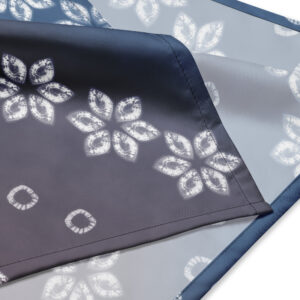
Shibori Collection – Traditional Japanese Resist Dye Reimagined for Modern Textile Design
Hand-dyed cloth transformed into wearable design.
From Handwork to Digital Pattern
Preserving irregularity
Designed for modern living
What is Shibori?
Shibori is a traditional Japanese resist-dye technique developed centuries ago.
Unlike modern tie-dye, shibori involves precise binding, folding, and stitching to create intricate patterns.
Shibori vs Tie-Dye — A Difference in Intention
At first glance, shibori and tie-dye may appear similar. Both use resist-dye techniques. Both embrace patterns born from fabric manipulation.
Yet their spirit is fundamentally different.
Tie-dye is often spontaneous — expressive, bold, and driven by chance. Color radiates outward in energetic bursts, celebrating unpredictability and freedom.
Shibori, in contrast, is guided by intention.
Rooted in centuries of Japanese textile tradition, it is shaped through deliberate folding, binding, stitching, and compression. Each mark emerges from controlled tension. Each pattern carries rhythm and restraint.
Where tie-dye embraces randomness, shibori seeks balance.
Where one feels improvised, the other feels composed.
Shibori is not simply dyed fabric — it is a structured expression, shaped by hand and guided by discipline.
From Hand-Dyed Cloth to Contemporary Textile Design
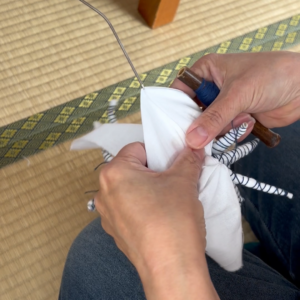
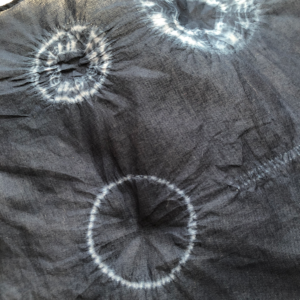
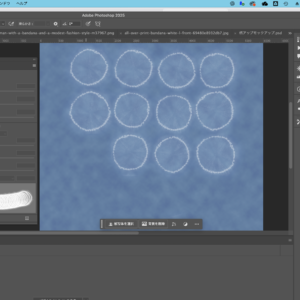
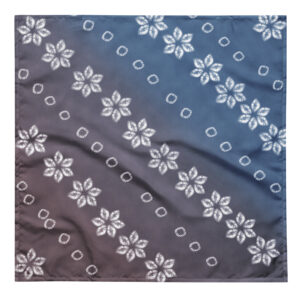
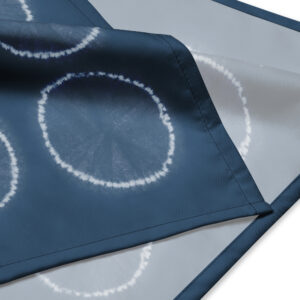
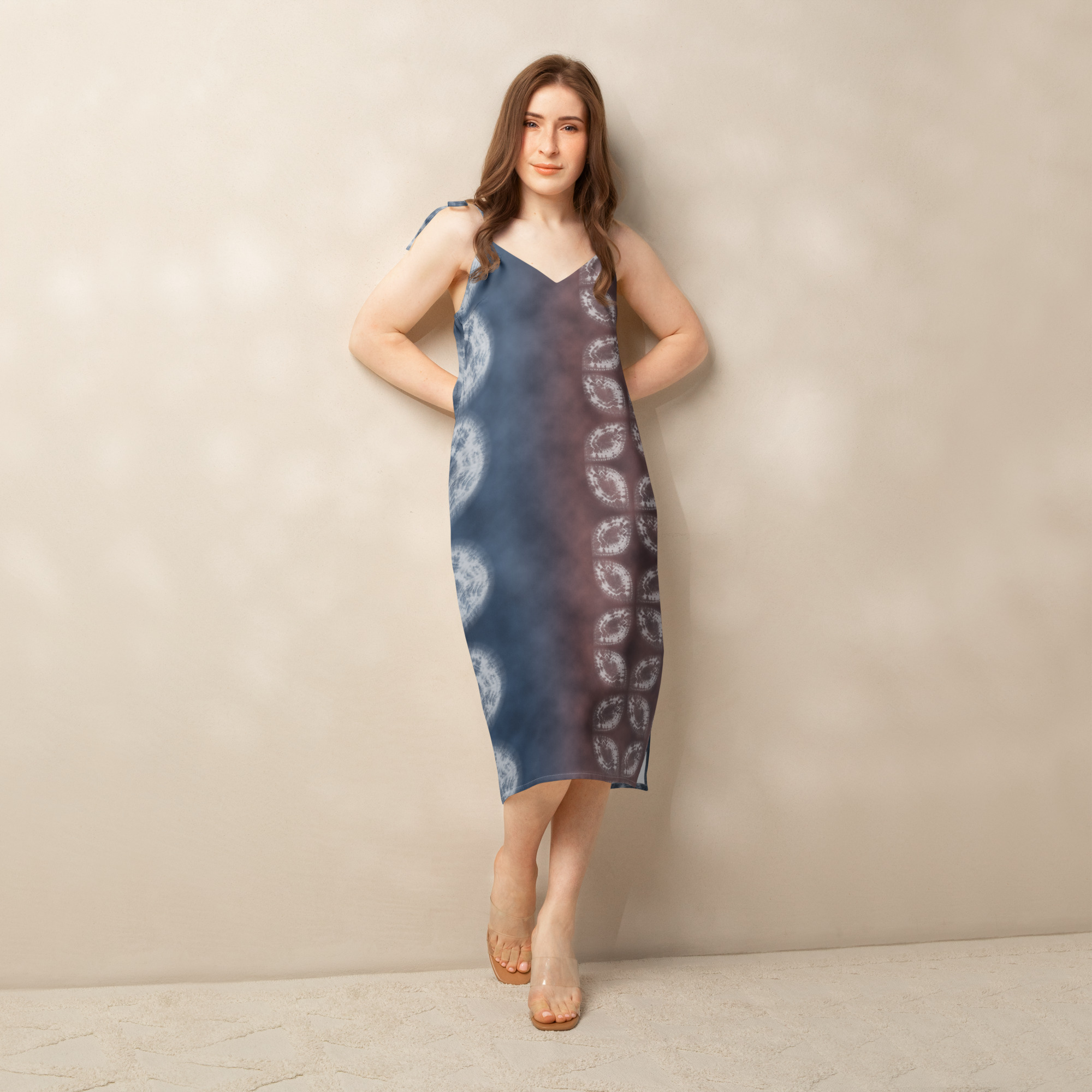
Each pattern begins with real hand-dyed shibori fabric — created through traditional Japanese resist-dye techniques. The subtle irregularities, the tension of the bindings, and the organic rhythm of the cloth are intentionally preserved.
Rather than reproducing the fabric mechanically, the original textile is carefully translated into digital form. This process allows the depth and movement of handwork to remain visible, while making the design adaptable for contemporary use.
The result is textile art made wearable — patterns rooted in tradition, refined for everyday life.
Designed in Japan, each piece balances craft and practicality, bringing the quiet strength of shibori into modern wardrobes and daily routines.
Products by Category
-
Akane & Indigo Shibori-Inspired Slip Dress Dramatic Two-Tone All-Over Print
¥8,100 -
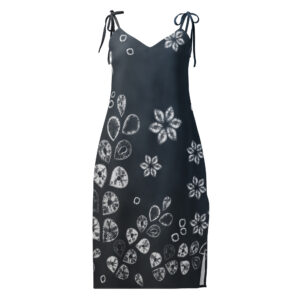
Blue black Floral Shibori Inspired Slip Dress
¥7,800 -
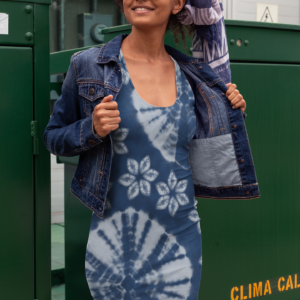
Bold Shibori-Inspired Indigo Bodycon dress
¥6,595 -
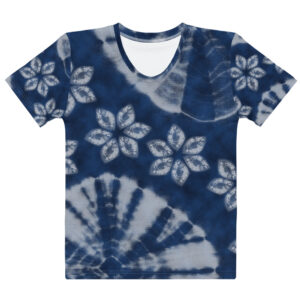
Bold Shibori-Inspired T-Shirt – Indigo All-Over Print for Practice & Everyday Wear
¥5,100 -
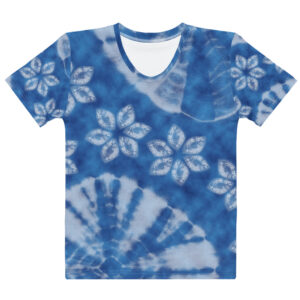
Bold Shibori-Inspired T-Shirt – Light Indigo All-Over Print for Practice & Everyday Wear
¥5,100 -
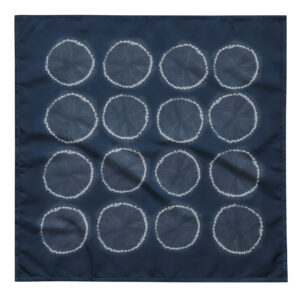
Deep Indigo Nuishime Shibori Circle Furoshiki Bandana – Even Grid
Price range: ¥4,500 through ¥5,900 -
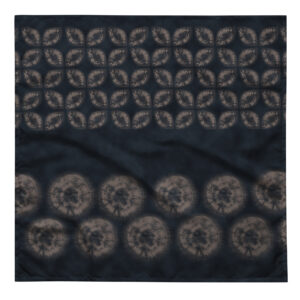
Deep Indigo Overdyed with Kakishibu Shibori Shippou & Circle bandana Furoshiki
Price range: ¥4,500 through ¥5,900 -

Deep Indigo Shibori Neck Gaiter – All-Season Tube Scarf Inspired by Japanese Tie-Dy
¥3,300 -
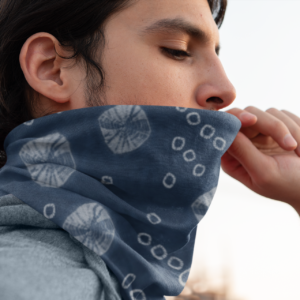
Deep Indigo Shibori Neck Gaiter – All-Season Tube Scarf Inspired by Japanese Tie-Dye Tekumo
¥3,300