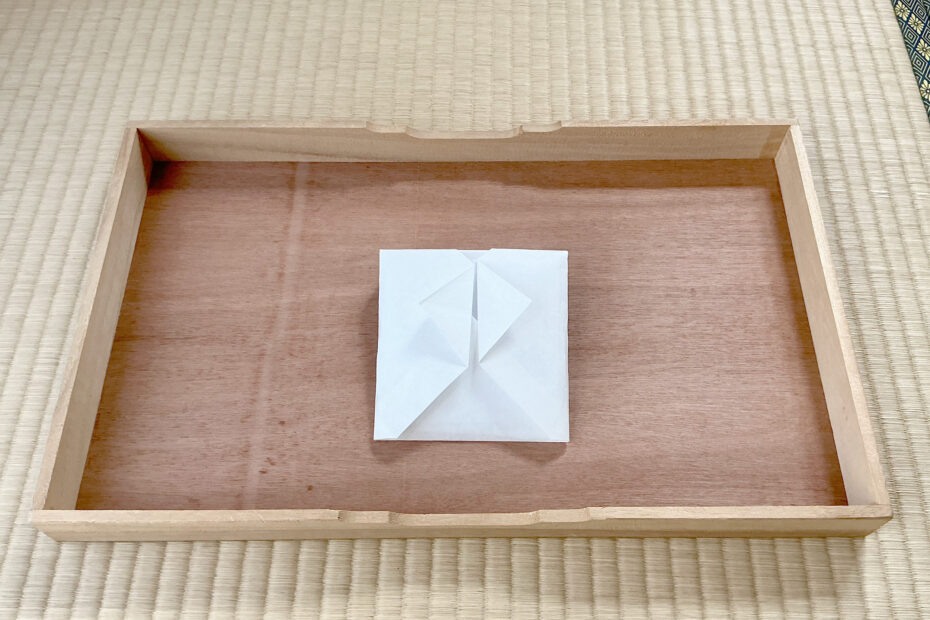
A Small Lesson in Japanese Practice
Recently, I received an unusual order from overseas.
A customer living abroad asked me to prepare a small item to be offered at a shrine in Japan.
The item itself was very simple. It was just a single white handkerchief. Yet, the destination and purpose made this order different from my usual work.
Although it was not a large or elaborate offering, I felt it deserved careful handling.
Sending something to a shrine is not the same as shipping a product.
It involves intention, respect, and an understanding of how such items are received on the other side.
Why I Paused Before Sending It
At first glance, this seemed straightforward.
But I hesitated.
In Japan, context matters.
Even a small object can change meaning depending on where it is sent and how it is presented.
Before proceeding, I felt it was important to confirm how the shrine would prefer to get the item. I wanted to make sure I did not assume or impose my own interpretation of what an “offering” should be.
Contacting the Shrine
I checked the shrine’s website, but there was no email contact listed.
Instead, communication is traditionally handled by phone or fax.
I did not want to interrupt their daily work. So, I chose to send a short fax with a simple question:
Is it acceptable to mail a small offering? Also, how should it be handled?
I later received a kind phone reply, which clarified everything.
“Offering” Has More Than One Meaning
This conversation taught me something I had not fully understood before.
In Japan, the word “offering” does not refer to a single, fixed practice.
There are several forms, including:
- formal offerings presented during rituals
- Items placed before the deity as offerings
- objects intended for showing or long-term keeping
- monetary donations without physical items
Each form carries different expectations and responsibilities.
In this case, the shrine suggested treating the item as a small offering. It should be placed before the deity without ceremony or special arrangements.
This approach felt natural and appropriate for both sides.
Preparing the Item: Origata and Fukusa Wrapping
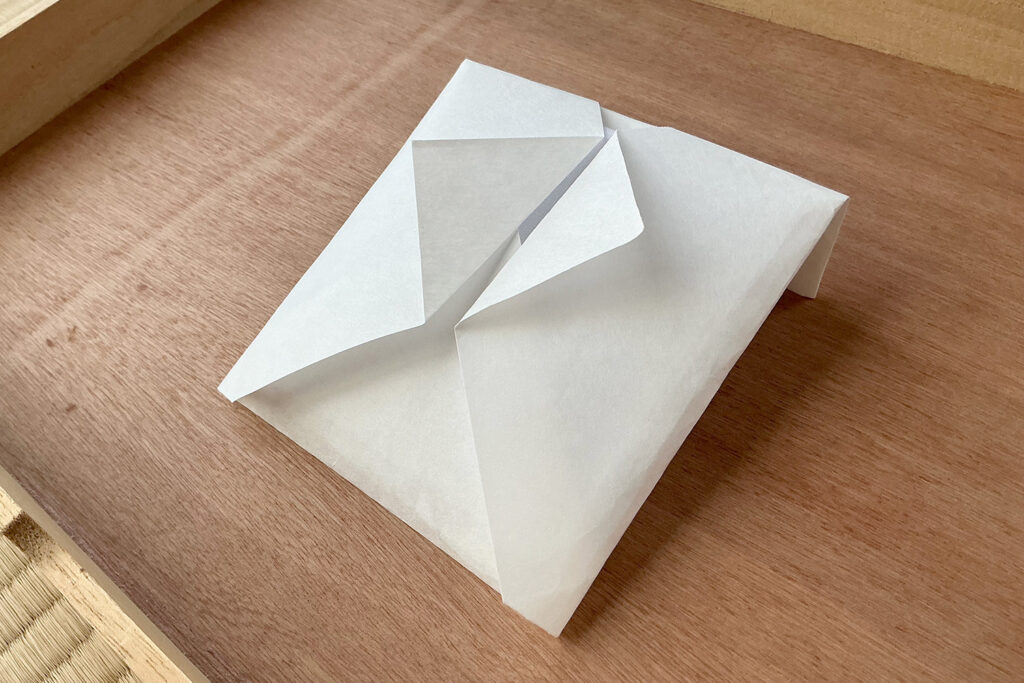
For packaging, I chose a very simple form of origata, using plain white washi paper.
Specifically, I used a style known as fukusa wrapping.
This was not intended as a formal ritual wrapping.
Rather, it was a quiet gesture. It was a way to prepare the item respectfully. This also kept things simple and practical for the shrine staff.
I avoided decorative elements like mizuhiki cords or printed designs.
The goal was not to embellish, but to keep the focus on ease of use and handling.
Thinking From the Shrine’s Perspective
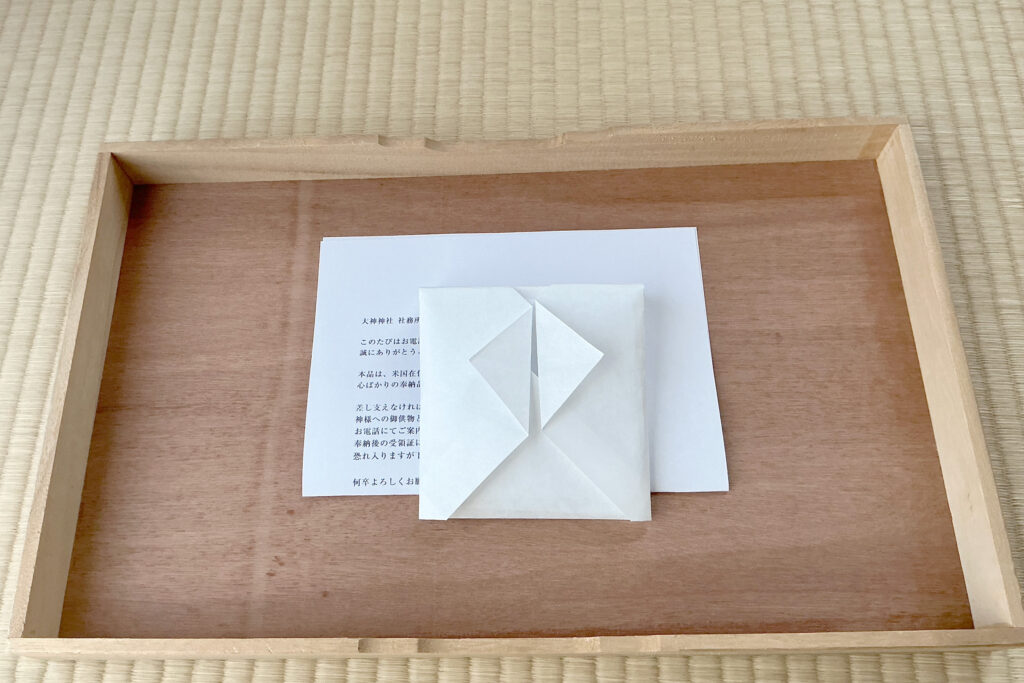
Throughout this process, I tried to think about what would be least burdensome for the recipient.
Respect, in this context, meant restraint.
Not adding unnecessary formality.
Not creating extra steps.
Even the offering receipt was sent to a domestic location to avoid the complications of overseas mailing.
These small decisions were guided by a single question.
What would make this easiest and most comfortable for the shrine to get?
A Quiet Reminder
This experience reminded me that even the smallest item can carry meaning.
Sometimes, taking a moment to pause, ask, and adjust is more important than acting quickly or confidently.
Care, in many cases, is found not in decoration or ceremony, but in attention.
For those interested, I also keep a small selection of origami-related books available through my studio.