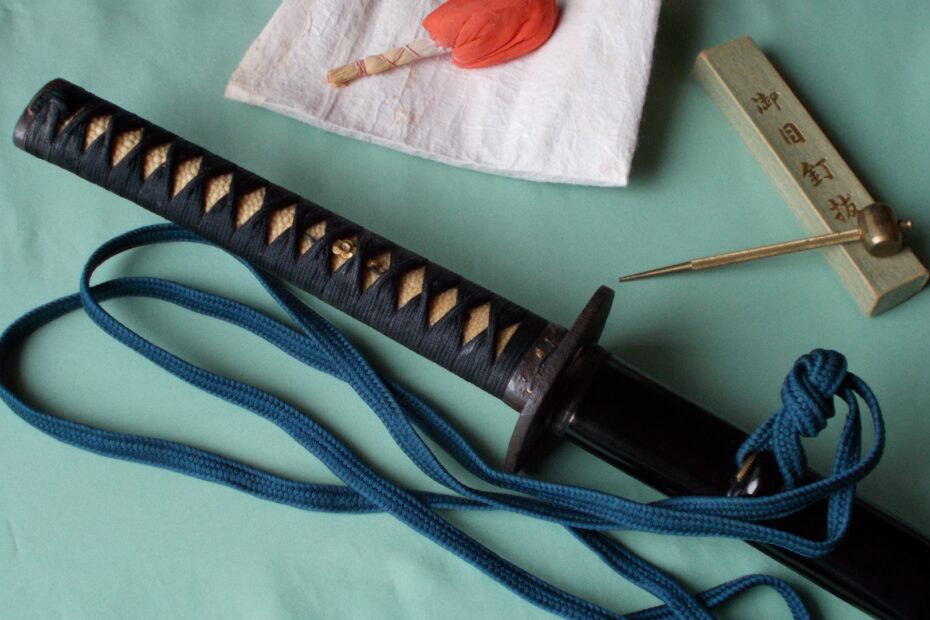
Sageo vs Tsukaito
What Is the Difference Between Sageo and Tsukaito?
A Practical Guide to Length, Function, and Proper Use
Introduction: Why Sageo and Tsukaito Are Often Confused
In Japanese swords, several types of cords are used.
Among them, sageo and tsukaito are frequently confused.
They may look similar, as both are made using traditional braiding techniques.
However, their functions, required length, structure, and physical properties are completely different.
This article explains the difference between sageo and tsukaito from a practical, real-world perspective, based on how these cords are actually used.
What Is Sageo? (Sword Scabbard Cord)
Sageo is the cord attached to the scabbard (saya) of a Japanese sword.
It is used when wearing the sword, securing it to the obi, and performing formal movements in iaido and traditional sword schools.
Primary Functions of Sageo
- Stabilising the sword when worn
- Supporting formal movements and etiquette
- Securing the sword when stored or placed in a sword bag
Sageo is not decorative.
It is a functional component that directly affects movement and form.
Sageo Length: Why Size Matters in Practice
Sageo does not have a single fixed length.
It varies depending on the type of sword and the body of the person using it.
General Length Guidelines
- Tantō: approx. 90 cm
- Wakizashi: approx. 120 cm
- Katana: approx. 180–220 cm
- Maximum length: up to approx. 240 cm
These values are only guidelines.
In practice, the wearer’s height, arm length, and movement style are critical factors.
In iaido, an incorrect sageo length can result in:
- Knots that do not settle correctly
- Awkward or delayed movements
- Loss of visual clarity and form
For this reason, sageo should be selected to match the individual, not only the sword.
Required Properties of Sageo
Sageo must have:
- Adequate thickness
- High durability
- Sufficient suppleness for repeated tying
A cord that is too thin lacks strength.
A cord that is too stiff interferes with knots and movement.
Sageo is designed to be tied and untied repeatedly, so it must balance strength with controlled flexibility.
What Is Tsukaito? (Handle Wrapping Cord)
Tsukaito is the cord wrapped around the handle (tsuka) of the sword.
Its role is critical to safety and control during use.
Primary Functions of Tsukaito
- Preventing the hand from slipping
- Stabilising the internal structure of the handle
- Ensuring safe and secure handling
Required Length of Tsukaito
Because tsukaito is wrapped continuously around the handle,
a single cord of sufficient length is required.
The typical length used is approximately 3–5 metres per handle.
The required amount depends on:
- Handle length
- Wrapping method
- Tightness of the wrap
- Thickness of the handle
Tsukaito cannot be joined mid-wrap, so extra length is essential.
Flexibility in Tsukaito Construction
Tsukaito requires not only strength but also controlled flexibility.
This allows:
- A natural feel in the hand
- Slight responsiveness under pressure
- Reduced fatigue during extended use
A cord that is too rigid compromises grip comfort and wrap stability.
For this reason, tsukaito is made using braiding structures and materials that remain flexible even under tension.
Key Differences Between Sageo and Tsukaito
| Feature | Sageo | Tsukaito |
|---|---|---|
| Location | Scabbard | Handle |
| Primary role | Wearing & etiquette | Grip & safety |
| Typical length | 90–240 cm | 3–5 m |
| Required properties | Thickness, strength, suppleness | Strength with flexibility |
| Usage | Frequently retied | Remains wrapped |
Although both are cords,
their design principles are entirely different.
A Note on Decorative Practice in Replica Swords
In inexpensive replica or display swords,
the same braided cord is sometimes used for both sageo and tsukaito.
This approach is purely decorative and not intended for practical use.
In authentic sword fittings:
- Sageo is selected for tying and movement
- Tsukaito is selected for grip and structural stability
Using replica sword specifications as a functional reference can lead to misunderstandings.
Modern Applications Beyond Swords
Today, cords originally developed for swords are also used in other contexts.
Sageo-type cords
- Sword bags and traditional accessories
- Decorative cords
- Japanese-style accessories
Tsukaito-type cords
- Grip reinforcement
- Tool handles
- Craft applications requiring durability
In all cases, understanding the original functional intent is essential.
Conclusion
- Sageo and tsukaito serve completely different purposes
- Length is determined by use, structure, and the individual
- Proper selection ensures safety, movement, and visual balance
Understanding these distinctions deepens appreciation for
Japanese sword culture and traditional cord craftsmanship.