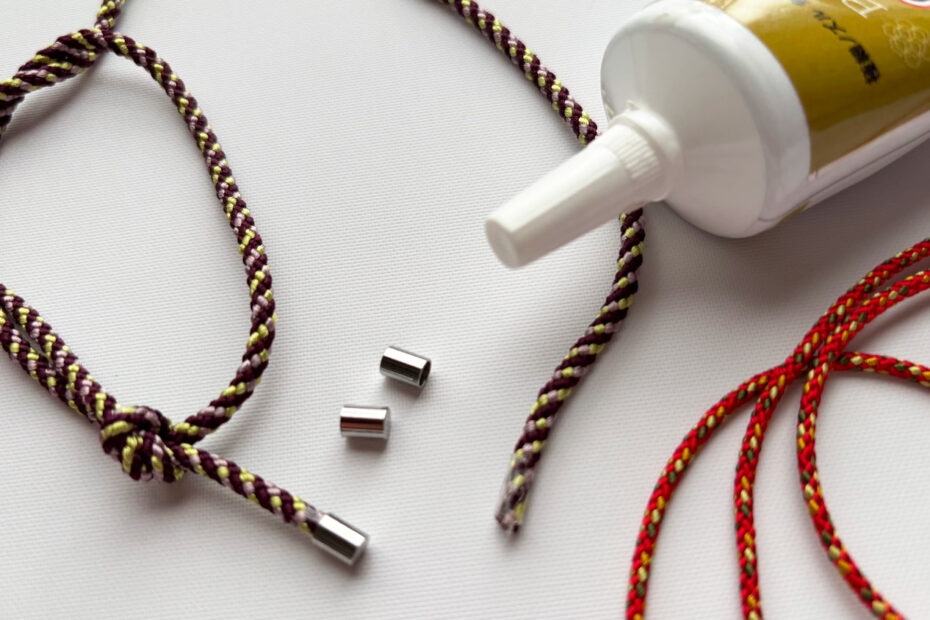
Why Adhesive Choice Matters in Silk Jewelry
Silk is a natural protein fibre, and it reacts differently to adhesives compared to synthetic cords such as polyester or nylon. Using an inappropriate glue may weaken the fibres, cause stiffness at the ends, or lead to long-term bond failure—issues that are especially problematic in fine jewelry.
Because silk is often chosen for its softness, drape, and refined appearance, the adhesive used at the end caps is crucial to maintaining both durability and aesthetics. Selecting the right adhesive helps preserve the silk’s natural character while ensuring a secure, professional finish.
Discover the best adhesive for silk cord to enhance durability and achieve a clean, professional result in your jewelry-making projects.
Jewelry Makers’ Guide to Bonding Silk to Metal
Choosing the right adhesive for silk cord and 18k gold end caps is essential for long-lasting jewelry. Unlike synthetic cords, silk fibres can absorb adhesives unevenly, which makes both adhesive choice and application technique particularly important.
This article explains commonly used jewelry adhesives for silk-to-metal bonding, based on standard practices among jewelry makers. It is intended as a general reference rather than a guarantee for a specific outcome.
What Is the Best Glue for Silk Cord and Metal End Caps?
There is no single “perfect” glue for every situation. Instead, several adhesives are commonly used in jewelry making, depending on factors such as cord thickness, end cap design, and the intended wear of the finished piece.
Below are the most frequently used options.
1. T-8000 Jewelry Adhesive for Silk and Metal
T-8000 adhesive is frequently used in jewelry and textile-based designs.
- Suitable for silk cords and metal end caps
- Dries clear
- Provides a slightly flexible bond
- Easy to control in small spaces
Many jewelry makers prefer T-8000 when working with fine silk cords and lightweight end caps, as it allows for precise application without excessive seepage.
2. E6000 Adhesive for Silk Cord Jewelry
E6000 is one of the most widely used adhesives in jewelry making.
- Strong adhesion to metal
- Works well with fabric and silk
- Flexible after curing
- Resistant to moisture and everyday wear
Because of its flexibility, E6000 is often chosen for necklaces and bracelets that experience regular movement during wear.
3. Two-Part Epoxy for 18K Gold End Caps
For maximum strength, some jewelry makers use a clear two-part epoxy.
- Excellent bonding to precious metals
- Strong, permanent adhesion
- Best suited for solid 18k gold end caps
Since epoxy cures rigidly, it should be applied in very small amounts and tested on a sample before final assembly, especially when working with delicate silk fibres.
How to Prepare Silk Cord and End Caps Before Gluing
Proper preparation significantly improves bond strength, regardless of adhesive choice.
- Clean the inside of the end cap with isopropyl alcohol to remove oils
- Lightly roughen the interior surface to improve adhesion
- Apply adhesive deep inside the cap rather than only at the opening
- Insert the silk cord slowly, allowing fibres to absorb the adhesive
- Avoid excess glue to keep the visible silk clean
These steps are commonly used by professional jewelry makers to improve durability and finish quality.
Which Adhesive Should You Choose?
- For flexibility and ease of use → T-8000 or E6000
- For the strongest long-term hold → Clear two-part epoxy
- For fine jewelry → Combine adhesive bonding with precise end-cap fitting
Testing different adhesives on a small sample is a standard practice before final production.
Final Thoughts
When attaching silk cords to 18k gold end caps, adhesive choice depends on the silk structure, the end cap design, and how the jewelry will be worn. No adhesive works universally for every design.
This guide is provided as a general reference, reflecting commonly used techniques in jewelry production.
FAQ|Silk Cord and Metal End Caps
Q. Can I use super glue for silk cord jewelry?
Super glue (cyanoacrylate) is generally not recommended for silk cords. It can make silk fibres brittle and may cause discoloration over time.
Q. Is epoxy better than jewelry glue for 18k gold end caps?
Epoxy provides the strongest bond, but it cures rigidly. Many jewelry makers choose T-8000 or E6000 for flexibility and epoxy for maximum strength.
Q. Do professional jewelry makers always use glue?
Many professionals combine adhesive bonding with a well-fitted end cap or mechanical support for added durability.
For Jewelry Designers Using Silk Cords
When working with high-quality silk cords, testing adhesives on a small sample is a common and recommended practice before final assembly, especially for custom or fine jewelry pieces.